
10 good habits for students
GOOD HABITS
Success in school and life largely depends on the habits we develop early on. For students, cultivating good habits is essential not only for academic achievement but also for building discipline, responsibility, and a positive mindset. These habits become the foundation for a well-balanced, successful future. In this essay, we will explore various good habits that students should adopt to excel both in and outside the classroom.
Setting Goals
Setting short-term and long-term goals gives students direction and motivation. Whether it is achieving a certain grade, finishing a book, or learning a new skill, having goals encourages focus and effort.
Staying Organized
Organization is a key skill that saves time and minimizes confusion. Students should keep their study materials, notes, and assignments neatly arranged. Using planners, notebooks, or digital tools like calendar apps can help manage tasks effectively.
Time Management
One of the most important habits a student can develop is effective time management. Managing time wisely allows students to complete assignments, study for exams, participate in extracurricular activities, and still have time for rest and recreation
Active Participation in Class
Good students engage actively in class by listening attentively, asking questions, and contributing to discussions. Active participation helps clarify doubts and reinforces learning. It also shows teachers that the student is interested and committed.
Reading Habit
Reading is one of the most powerful habits a student can develop. Apart from textbooks, students should explore novels, newspapers, magazines, and informative websites.
Regular Study Routine
Success in academics is not about last-minute cramming but consistent effort. A regular study routine helps retain information better and builds a deeper understanding of concepts.
Healthy Lifestyle
A healthy body supports a healthy mind. Students should eat a balanced diet, get enough sleep, and exercise regularly. Physical activities like walking, yoga, can reduce stress and increase concentration.
Positive Attitude and Growth Mindset
A positive attitude helps students face challenges confidently. Instead of fearing failure, students should view mistakes as opportunities to learn and grow. A growth mindset—believing that abilities can be developed through effort—encourages persistence and resilience.
Respect and Discipline
Good behavior and discipline reflect a student’s character. Respecting teachers, and rules creates a healthy learning environment. Discipline includes being punctual, completing homework on time, and maintaining decorum in class.
Limiting Distractions
In today’s digital age, distractions are everywhere—mobile phones, social media, games, and TV. Students must learn to control these distractions during study time. Using apps that block distractions or setting limits on screen time can be helpful.
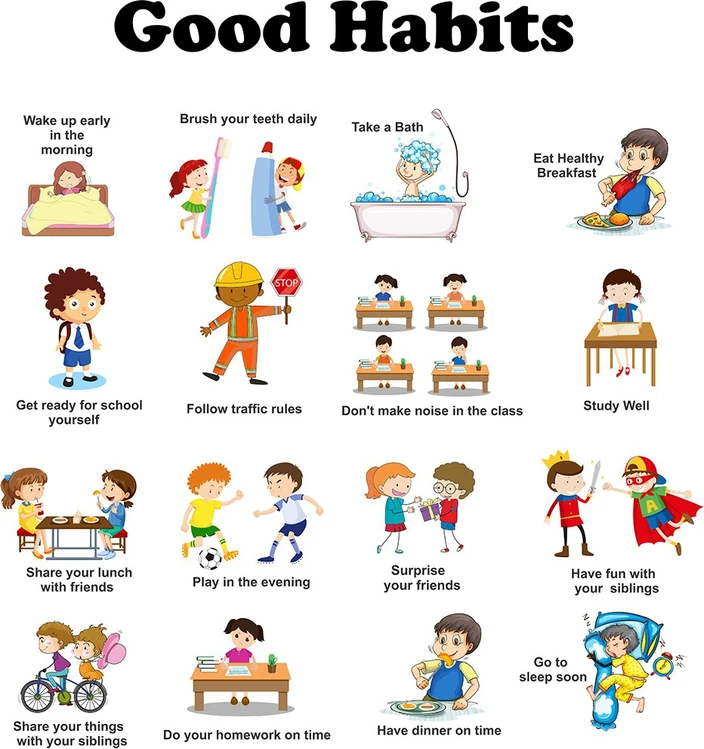
Good habits are the building blocks of a successful and fulfilling life. By incorporating positive habits into your daily routine, you can improve your physical and mental health, increase productivity, and enhance your relationships. In this article, we’ll explore the benefits of good habits and provide tips on how to develop them.
Starting your day on a positive note can set the tone for the rest of the day. Here are some morning habits that can help you boost your energy and productivity:
- Wake up early: Waking up early gives you a head start on your day, allowing you to get a jumpstart on your goals.
- Exercise or stretch: Morning exercise or stretching can help increase your energy levels and improve your flexibility.
Being productive is essential for achieving your goals and reducing stress. Here are some productivity habits that can help you get more done in less time:
- Prioritize tasks: Prioritizing your tasks helps you focus on the most important ones first, ensuring you make progress on your goals.
- Use a task list or planner: Writing down your tasks and checking them off as you complete them can help you stay organized and motivated.
Taking care of your physical and mental health is essential for overall well-being. Here are some health and wellness habits that can help you feel your best:
- Eat a balanced diet: Eating a balanced diet provides your body with the nutrients it needs to function properly.
- Stay hydrated: Drinking enough water is essential for maintaining your physical and mental health.
Managing your finances effectively is crucial for achieving financial stability and security. Here are some financial habits that can help you manage your money more effectively:
- Create a budget: Creating a budget helps you track your income and expenses, making it easier to manage your finances.
- Save regularly: Saving regularly can help you build an emergency fund and achieve your long-term financial goals.
Building strong relationships with others is essential for emotional support and overall well-being. Here are some relationship habits that can help you build stronger connections with others:
- Communicate effectively: Communicating effectively is crucial for building trust and understanding in relationships.
- Listen actively: Listening actively shows that you value and respect the other person’s thoughts and feelings.
Continuously learning and growing is essential for personal development and fulfillment. Here are some personal growth habits that can help you achieve your goals:
- Set goals and track progress: Setting goals and tracking progress can help you stay focused and motivated.
- Learn from failures: Learning from failures can help you grow and improve, rather than getting discouraged.